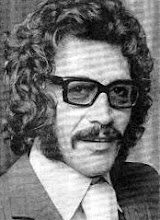
The spectacularly named Lady Teresa Anna Von Arletowicz, was better known as Bobbie McGee and released the single “Rock and Roll People” in 1973.
Originally from London via South Africa she was nicknamed “Gladys Glitter” by the British press at the time. Sadly any great success was to elude her in the UK where there was only room for one glam rock chick in Suzi Quatro.
She continued to release singles until 76 but never really got the recognition she deserved and now has something of a cult following.
So with that in mind I thought I would put together my own list of the glam rock songs that remind me of certain comics, magazines or books.
1. Avengers UK # 28 – March 1974
Ah yes the joys of playing truant from school and buying a comic to read in the bus station while Roll Away the Stone by Mott the Hoople plays on someone's portable radio. (Don’t do it kids, besides I got caught so no pocket money for weeks).
Who could resist the kung fu-tastic Shang-Chi bursting through the comic cover and into my young life. And all for 6p.
2. Shiver and Shake – 1973
Rockin and boppin with Frankie Stein and Sweeny Toddler to Mud’s Rocket.
3. Raven Sword Mistress of Chaos – 1978
The first book didn’t come out until 1978 but it always reminds me of Bowie’s Rock and Roll Suicide from the Ziggy Stardust album.
There’s nothing like a classic Bowie album on the stereogram and a book about a half naked woman with a sword. I was 15; young; hormones and all that. A great cover illustration by Chris Achilleos was a bonus.
4. Look In - 1973 onwards
The classic British TV related picture and story magazine and the Glitter Band’s Angel Face.
5. Spider-Man Comics Weekly UK # 109 – March 1975
Great cover – well worth the wait to see the Black Widow in her new and improved costume. Anyway this always makes me think of the Sweet’s Teenage Rampage.
6. The Three Investigators: The Secret of Terror Castle and others
I bought all this series of books as a kid. My friend Brian and I even tried to set up our own investigating agency. Never quite worked out, The Mystery of the Rickety Gate didn’t have the same ring as the above.
But we enjoyed listening to My Friend Stan by Slade while we were dreaming of becoming great detectives.
"Childhood is a journey through another land, lost to us now, to be found only in memory"
Taken from “The Glory of Glam” Radio 2 2010, presented by Gary Kemp.
Glam was glorious. Brought on by rock's self indulgent pretensions in 1970 when psychedelia and prog rock were at their peak, glam brought a satin and sequin-fuelled return to the frivolous basics of rock 'n' roll and created the biggest, brightest, shiniest beast the music business had seen.
In the first programme, The Birth of Glam, Gary looks at the fascinating relationship between Marc Bolan and David Bowie and considers how it helped fuel the flamboyant creation of glam. As Angie Bowie says: "David and Marc liked each other very much and at certain times were great friends, but they were also bitter rivals."
Both Marc and David had spent the 60's as itinerant musicians, drifting through a succession of image changes whilst searching for pop stardom. In the mid 60s they were mods, then hippies, as they experimented with a variety of styles in search of their own musical niche.
Inspired by Syd Barrett's early work with Pink Floyd, and assisted by the producer/engineer Tony Visconti, Marc and David began incorporating fantasy and theatrics into their live and recorded work. In 1970, following a night spent at Eric Clapton's house watching him play guitar, Marc ditched the acoustic guitar, which he'd used for four albums worth of hippie folk with Tyrannosaurus Rex, and plugged in a brand new Fender Stratocaster.
On July 1, 1970 he recorded a startling 2 minute piece of perfect pop that re-launched the single as a work of art in electrifying fashion. Ride a White Swan, released by the newly abbreviated T-Rex, quickly peaked at No 2 on the charts.
Inspired by his first taste of major pop success Marc began a short but explosive era of chart domination that included the singles Hot Love, Get It On, Jeepster, Telegram Sam, Metal Guru, Children of The Revolution, Solid Gold Easy Action, 20th Century Boy and the albums Electric Warrior, The Slider and Tanx .
In support of their hit singles and albums, Bolan and T-Rex toured constantly and flounced on to stages around the world in ever more flamboyant costumes of sequins and satins, all propped up on impossibly high platform boots, as the glam craze they helped create became incredibly popular.
While Marc was incorporating electric guitar into his music, and sourcing outrageous costumes from trendy boutiques, he was a regular visitor to David Bowie's home in Beckenham, Kent. Haddon Hall had become a musician's commune which one visitor compared to "Dracula's living room".
With various members of his band and their accompanying girlfriends, wives and boyfriends as housemates, David wrote and rehearsed songs for the album The Man Who Sold The World, which Tony Visconti began recording once he'd competed work on the album T-Rex.
Inspired by Andy Warhol and American bands like the New York Dolls and Velvet Underground, David's new album had a tougher edge to it and encouraged by his new wife Angie he began experimenting with new androgynous outfits and was photographed for the album cover wearing what he called a "man dress".
For the follow up album Hunky Dory, David channelled Greta Garbo for the cover and with songs like Changes and Oh You Pretty Things he re-inforced the bi-sexual persona he was promoting on stage. The album also included Life on Mars, a precursor to the next persona unleashed on the world in June 1972, with the release of The Rise and Fall of Ziggy Stardust and The Spiders From Mars.
Over an 18 month period Ziggy became the epitome of glam. Released the same month as T-Rex released The Slider album, and Roxy Music released their debut self titled LP, the Ziggy Stardust album became a benchmark by which all other glam albums were judged.
With Marc, David and Roxy Music all dominating the charts in late 1972 and 1973, several rock bands who had been carving out solid but unspectacular careers for several years, also decided to add satin and sequins to their stage outfits and suddenly The Sweet, Slade, Mud, Wizzard, Gary Glitter and Alvin Stardust were among the bands that rode the crest of the wave.
Contributors include David Bowie, Tony Visconti, Bryan Ferry, Phil Manzanera, Noddy Holder, Mike Chapman, Rick Wakeman, Angie Bowie, Steve Harley, Antony Price, Mick Rock, Iggy Pop and archive interviews with Marc Bolan.
In Dressed To Kill, the second part of The Glory of Glam, Gary Kemp highlights the most successful acts of the glam era and discovers why their influence is still being heard in many of today's new bands.
In the summer of 1972, as T-Rex released The Slider and David Bowie released The Rise and Fall of Ziggy Stardust and The Spiders From Mars, Roxy Music released their debut self-titled album and began touring their own version of glamorous art-influenced rock'n'roll. With stunning outfits created by designer Antony Price, Roxy became as influential as Marc and David.
In fact Roxy Music and The Spiders From Mars shared the bill at several venues in 1972, playing to small audiences who according to Phil Manzanera "weren't quite sure what they were seeing with all that glitz and glam."
Inspired by the chart success that glam artists were achieving, several rock bands who had been carving out solid but unspectacular careers for years, also decided to add satin and sequins to their stage outfits and suddenly The Sweet, Slade, Mud, Wizzard, Gary Glitter and Alvin Stardust were among those enjoying chart success.
Along with 10CC, Sparks, Mott The Hoople, Kiss, Alice Cooper, Queen, Cockney Rebel, and even Suzi Quatro, who enjoyed chart success with the help of a bit of additional glitter. Even major acts like Rod Stewart, The Rolling Stones and Elton John dabbled in a bit of sparkly make-up.
As Angie Bowie recalls, "thanks to David and Marc they all realised that girls like pretty boys".
Not really a pretty boy.
Contributors include John Lydon, Alice Cooper, Gene Simmons, Steve Harley, David Bowie, Tony Visconti, Bryan Ferry, Boz Boorer, Pete Phipps, Noddy Holder, Roger Taylor, Marc Almond, Paolo Hewitt, Storm Thorgerson, Antony Price, Phil Manzanera, Mike Chapman, Rick Wakeman, Angie Bowie, Mick Rock, Suzi Quatro, Iggy Pop and archive interviews with Marc Bolan.
To put it in boxing terms; in the first round we had the Sweet vs. Tony Blackburn(see here); a knock-out to the Sweet and strictly lightweight.
To kick off round two we have the Sweet vs. New World and 'Tom Tom Turnaround'. I think a technical knock-out to the Sweet in this lower middleweight contest.
Round three puts the Sweet up against journeymen Light Fantastic and 'Jeanie'(see here). A fair result would be a draw.
But the heavyweight championship of glam songs pits the Sweet against king of the ring David Bowie. It’s the ‘slammer in the glammer’, a ‘Hitter in the glitter’ a ‘Shake up with the make up’, its 'Blockbuster' vs. 'the Jean Genie'.
It’s a points win for the Sweet by virtue of it reaching # 1 in the UK charts.
The opening riff of the song is not the only thing they have in common. Both songs were released in 1972 and both were on the RCA record label.
The Sweet's single, written by Mike Chapman and Nicky Chinn, was recorded and released slightly later than Bowie's song, but it went on to reach #1 in the UK charts while "The Jean Genie" could only reach #2.
When asked about the songs similarities, Nicky Chinn stated: "Oh, absolute coincidence. The ridiculous thing was, of course, they were both on the same record label (RCA). But I know we had never heard Bowie's 'Jean Genie' and to the best of my knowledge he hadn't heard 'Blockbuster'.
There was a lot of fuss about it at the time. I think it's interesting to note, and again it was not a conscious thing on our part, but the riff is extremely similar to 'I'm A Man' by The Yardbirds. Fortunately, we went to No. 1 and Bowie went to 2." - Record Collector (1998) talking to Nicky Chinn and Mike Chapman
Chinn went on to describe a meeting with Bowie at which the latter "looked at me completely deadpan and said 'Cunt!' And then he got up and gave me a hug and said, 'Congratulations”
The second track is a b-side and appeared on the T Rex # 1 single “Get It On” in 1971. I love the way it goes from a slow, string infused song into a more trademark Bolan rock n roll boogie.
Unlike its coverage in the movies glam rock had a better time on British TV, although this did come towards the end of glam rock’s popularity, and in the case of “Marc” well after glam rock's heyday.
The major music programme of the time was Top of the Pops. TOTP has already been coveredhere on this blog, so I will start with ‘Supersonic’ a British children's television music show which also featured pop music artists of the day.
Launched in 1975, it was produced by London Weekend Television for the ITV network and ran for two years. The show lasted 30 minutes and was broadcast, firstly, on Thursday afternoons and then moved to a Saturday afternoon slot. The programme was presented by film and music producer Mike Mansfield.
Although the show starred performers with songs in the music charts, unlike its BBC rival Top of the Pops, it was not chart-based. Whilst Top of the Pops ran all year, Supersonic had a limited run with season one consisting of 30 editions and season two consisting of 28.
The show was recorded in front of an audience of children at the South Bank Television Centre and had a style of production in which cameras were highly visible and areas such as the production gallery were featured.
Its host also doubled up as producer and director, cueing in performances from the studio gallery instead of presenting conventional links to camera.
“Shang-a-Lang” was a children's pop music series starring the Scottish band, the Bay City Rollers. It was produced in Manchester by Granada Television for the ITV network and ran for one 20-week series in 1975.
It featured the band in a number of comedy sketches and performing their songs to a live studio audience made up of their teenage fans. This resulted in chaotic scenes at times as some members of the audience attempted to run onto the studio floor to meet their heroes, resulting in security officers having to forcibly restrain or even eject them from the studio.
The show's theme song "Shang-a-Lang” was a hit single for the group, peaking at number 2 in 1974 in the UK.
In 1976/77 the ITV network also produced “The Arrows Show”. The band would perform their own songs, and would also introduce guest artists, that included Marc Bolan, The Bay City Rollers, Gilbert O'Sullivan, Peter Noone, Alvin Stardust, Slade, Pilot and many more.
The band were popular in the teen print media in the mid 1970s, appearing in interviews and as pin-ups in all the glossy fan magazines of the day. They even had their own weekly cartoon strip which ran in ‘Music Star’ magazine.
The Arrows are the only band in pop music history to have a weekly TV series of their own and no records released. Although they had hit singles before their series, the band released no recordings during the entire run of the shows, both series.
This unusual situation was due to a legal wrangle with their record label. Their last single release was two months before the first broadcast Arrows TV show. There were 28 Arrows Shows in total.
Historically, The Arrows are now best known for writing, recording, and releasing the first version of the song "I Love Rock 'N Roll" in 1975, a year before the band had their TV series.
And last but not least was “Marc”.
In early 1977, Bolan got a new band together, released a new album, ‘Dandy in the Underworld’, and set out on a fresh UK tour, taking along punk band The Damned as support to entice a young audience who did not remember his heyday.
Granada Television commissioned Bolan to front a six-part series called Marc, where he introduced new and established bands and performed his own songs. By this time Bolan had lost weight, appearing as trim as he had during the height of T. Rex's popularity.
The show was broadcast during the post-school half-hour on ITV earmarked for children and teenagers; it was a big success. The last episode featured a unique Bolan duet with David Bowie during which Bolan fell off the stage. With no time for a retake, this occurrence was aired and Bowie's amusement was clearly visible and is reported to have called out "Could we have a wooden box for Marc [to stand on]?”
The show gave Bolan a chance to showcase punk bands, including Generation X, The Jam and Eddie and the Hot Rods. T. Rex performed three songs each week - a mixture of new versions of their old hits, and fresh tracks - while the guests were slotted in between.
It ran for six weekly episodes in the autumn of 1977, before its host died in a car crash on 16 September that year. The final show was recorded on 7 September 1977, but not broadcast until after Bolan's funeral on (20 September 1977).
Here are a couple of glam rock instrumentals to check out.
Cozy Powell, was an English rock drummer who made his name with many major rock bands over the years.
Powell stopped playing in other bands long enough to record two singles including "Dance with the Devil" which reached #3 in the UK singles chart during January 1974. The track featured Suzi Quatro on bass.
Cozy Powell died on 5 April 1998 following a car crash while driving his Saab 9000 at 104 mph (167 km/h) in bad weather on the M4 motorway near Bristol.
In 1978, the distinctive drum patterns, march breaks and chants formed the basis of Boney M's disco track "Nightflight to Venus" The chorus melody is taken from Jimi Hendrix's “Third Stone from The Sun” and would also be sampled for Right Said Fred's early Nineties hit "I'm Too Sexy."
After Mud had released "The Cat Crept In" in 1974 they also released another track from their album “Mud Rock”, a cover of "In the Mood". This was released under the name of Dum (Mud spelt backwards), but failed to chart.
The b-side to this was "Watching the Clock". This seemed to be a popular song for Mud who also released slightly different versions as b-sides on their singles ‘Oh Boy’ and ‘The Secrets that you keep’, where it was re-titled as ‘Still Watching the Clock’.
If you were to take a close look at my record collection back in the 70's (such as it was) you would have seen a few strange yet alluring compilation albums called "Top of the Pops".
In among the Bowie, T Rex and Slade were record covers that demanded your attention, and (to a ten year old boy) even appeared daring and risqué if a little embarrassing.
The record sleeves were great, but the music was rubbish; modern day hits played and sung by session musicians. I'm sure when I got these albums as gifts from various aunts and uncles I appeared grateful, but deep down I really wanted an "Airfix" model or a "Warlord" annual.
These days a full collection of these albums would bring a great price on "Ebay", but sadly the few that I owned are long gone.
Vol 36, 1974
They were first released in the late 60’s, (as an unauthorised spin off from the Top of the Pops TV show) by Pickwick Records on their Hallmark label.
The records contained anonymous cover versions of recent and current hit singles. The recordings were intended to replicate the sound of the original hits as closely as possible. The albums were recorded by a studio group comprising session musicians and singers who remained unaccredited, although they included Elton John and Tina Charles before their fame.
Record producer Alan Crawford conceived the idea for the Top of the Pops albums, having noted several UK labels such as Music for Pleasure pioneer the anonymous covers format during 1967 and 1968.
Crawford's key idea was to create a continuous series of albums with the same title. The Pickwick label agreed to undertake Crawford's idea and the first volume was issued in mid-1968.
Vol 27, 1972
In 1969 new volumes began appearing at generally regular intervals, with a new LP released every six to eight weeks. Volume numbers were not stated on the record sleeves, each edition simply called "Top of the Pops", the name derived from the un-trademarked BBC television show with which there was no direct connection.
During the early 1970s, the Top of the Pops series enjoyed considerable success and buoyant sales. Budget albums were accepted into the main UK album charts for a few months in 1971, during which four Top of the Pops LPs charted, and two made No. 1.
Vol 50, 1975
However they were disqualified in early 1972 since their budget selling price was perceived as giving them an unfair advantage in the market.
The albums continued to be released at regular intervals throughout the 1970s, with the general theme and cover art largely unchanged throughout. The cover designs are iconic, featuring female models in period attire, some with the models in skimpy clothing such as miniskirts and bikinis.
This blog is here to give a taste of the sights and sounds of the glam rock period. The forgotten A-sides and album tracks that weren't fully appreciated the first time, and the equally forgotten and long lost B-sides that were the flip-side of what glam was all about.The music and videos featured here are for evaluation and reference purposes only. They are only available to promote the music and the artists.If you like what you hear then go and buy the records, CDs, DVDs or any other format you can think of. Most of the songs on this blog are "Vinyl Rips" from my own collection. I have tried to clean them up as best I can so the sound will not be as clear and clean as the CD versions. Some crackles and hissing may still be heard. Anyway, the resulting MP3's are at 128 kbps. Any copyright holders who want me to remove any music/videos/pictures then just contact me and it will be removed immediately.



 Posts
Posts




.jpg)


